
DevOps
DevOps brings software development and IT operations together to deliver reliable applications more quickly. It combines collaboration, automation, and continuous improvement across the entire software lifecycle.
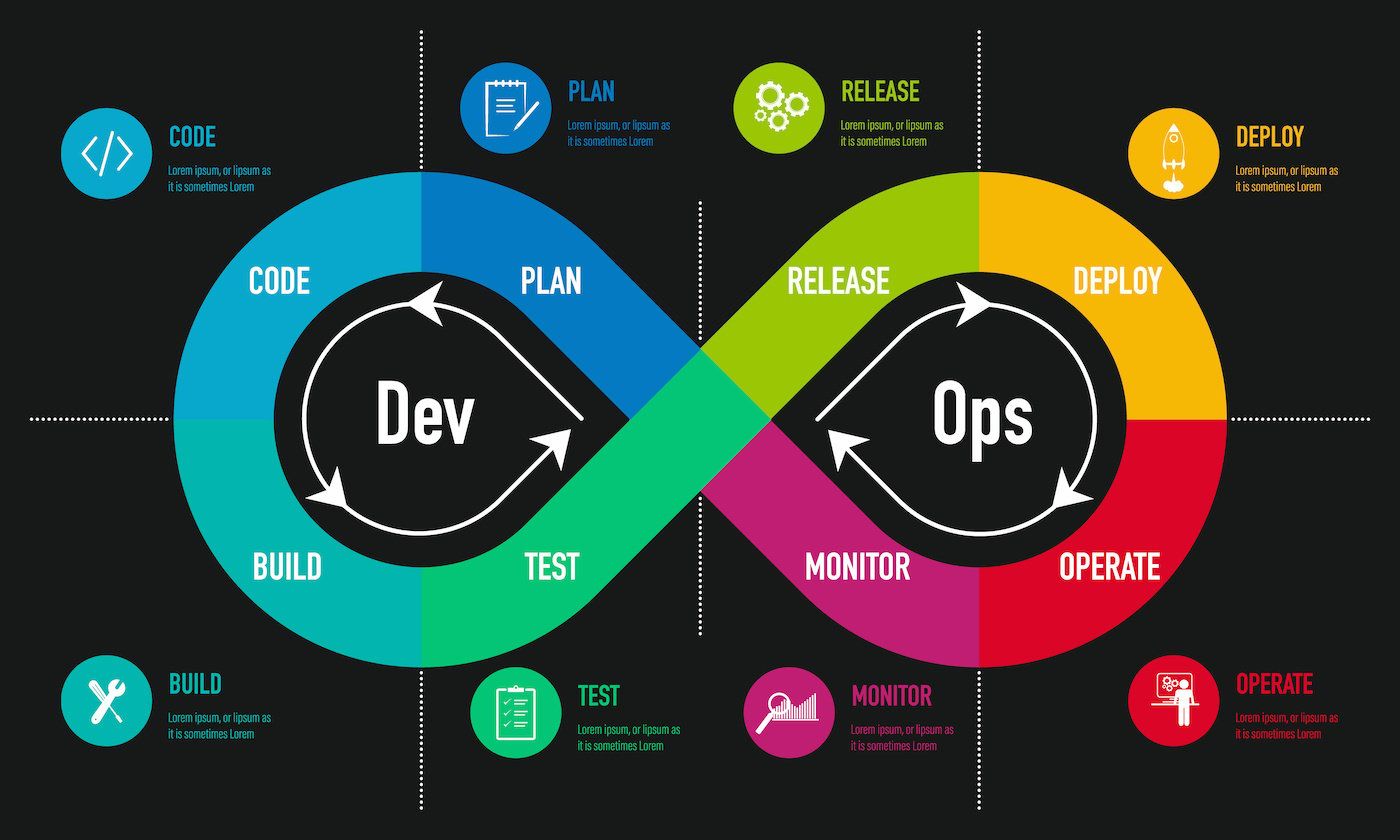
Continuous Integration and Delivery
Continuous integration allows developers to merge code frequently while automated tests detect problems early. Continuous delivery extends this process by preparing validated software for deployment to testing or production environments.
Infrastructure as Code
Infrastructure as Code makes it possible to define servers, networks, and cloud services using version-controlled configuration files. Tools such as Terraform, AWS CDK, and Ansible help teams create repeatable environments and reduce manual configuration errors.
Monitoring and Reliability
Monitoring provides visibility into application performance, infrastructure health, logs, and security events. Alerts help teams identify failures quickly, while metrics and traces make it easier to understand their root causes.
Automation and Collaboration
Automation removes repetitive work from building, testing, deploying, and maintaining software. Shared processes and clear ownership help development, operations, quality assurance, and security teams work toward the same goals.
DevOps is not simply a collection of tools. It is an approach that encourages small changes, rapid feedback, reliable automation, and continuous learning.